Răzvan Voica, CEO of the Informal School of IT, answers the biggest fears of people who want to take career-change courses
We're living in times when, more than ever, everything is being put to the test: the immune system, alertness, resilience, but also motivation and courage, and the people who find their professional balance are, in fact, the ones who adapt on the fly. But the world hasn't stopped. There are opportunities. Solutions. And it's entirely up to you to notice them.
This interview with Răzvan Voica, CEO & Co-founder of the Informal School of IT, is an invitation to optimism — in it he analyzes the profile of people who want to take career-change courses and answers all their fears.
Why is now the best time to learn IT? How can you find a safe path to a promising job, given the health crisis we're in?
All the answers come from the visionary who designed and put into practice a new educational system in Romania, where you can learn IT anytime, from anywhere, at any age. From the best.
We humans tend to procrastinate. "I'll go to the gym tomorrow," and "the day after tomorrow I'll start my career-change courses"
1. What do post-pandemic forecasts for IT look like?
From my point of view, they look very good. I say that because I've seen the pandemic accelerate globalization, in the true sense of the word. We can finally talk about the possibility of working for any company, from any country in the world, no matter where you are.
That's precisely because everything you know, all the know-how you have, is — to put it vividly — „portable”. It's all with you. We've realized you can work from your own home, in Romania, on a project running in the US.
I firmly believe that demonstrating this kind of ability today is almost like having a superpower.
2. Can I take career-change courses and switch careers now, at 30 - 40 years old, when I already have kids?
Why not? As long as you realize this is the path you want to follow and that you want to switch tracks toward IT, you can do it. I have good news: you have the best chances of landing in an industry that doesn't discriminate, that needs great people, capable people, people who bring fresh energy and who want to push projects forward.
We have plenty of examples here at the Informal School of IT of students over 30, even over 40, who've managed to successfully change careers.
3. I'm thinking about taking career-change courses. How do I know 100% that it's the right time for a change?
I think that, over the years, the feeling that somehow makes you sense you're not doing what you want gets worse. That you're not using your intellectual abilities at the level you'd like. That you're losing yourself. That the years go by and you keep wanting to make a change, but — surprise — you haven't done it.
Unfortunately, it's exactly that „I'll go to the gym tomorrow” zone, but „maybe not tomorrow, the day after”, „maybe not the day after either…”.
We humans tend to procrastinate. And there's a reason for that: I think, in this context, most people imagine that when a career change is on the table, they have to completely reset and become someone else. That's a fairly flawed way of thinking.
It's important to accept that everything we've become, up to the point where we embrace change, matters a great deal. We build on who we are. Who we are doesn't disappear. Nor should it.
Our expertise, even from other fields, can be very, very important for the IT industry, which connects so dynamically with all kinds of areas of the economy. So it's not wrong to say that a career change into IT means adding a technical component to everything you already know.
What does that mean? Learning the language, understanding how things are framed in that industry, gathering enough context and enough information. So that when I start an entry-level job, I'm right at the point where everything I've learned makes sense, as Steve Jobs said: Connecting the dots.
4. What exactly, among the job-market realities caused by the pandemic, has triggered more and more people's desire to take career-change courses?
The answer is pretty simple: the pandemic split us into two categories: on one hand, those who were able to continue working remotely, and on the other, those who — unfortunately — couldn't do that and even lost their jobs, because the companies they worked for closed down.
I think this context made us realize, once again, that anyone working professionally in a digital environment was very well protected right from the start of the pandemic. Interest in the IT job market (already high) grew even more during this period, as more and more people realized it was a safe path to a promising future job and started looking for career-change courses.
„IT is one of the star industries of the Romanian economy and has proven it can rise above difficult periods. This is a good time to take career-change courses in IT”
5. What outlook has the IT industry offered, from the very start of the pandemic realities, and why is it still an invitation to optimism?
The IT industry has earned its reputation over time, in a completely natural way. People have repeatedly seen, not just now, what possibilities and prospects this field offers.
Metaphorically speaking, we could say that — from this point of view — the pandemic worked exactly like a magnifying glass. It put even more focus on this industry, which clearly stood out from other fields of activity during lockdown periods. People noticed that most IT companies kept their projects going. Their teams managed to work remotely very well and hit their goals.
In short, we can say that IT has proven, once again, that it can rise above difficult periods, and yes, that is an invitation to optimism.
In this whole context we find ourselves in, in the middle of the health crisis in Romania and around the world, there's a field where high performance keeps happening. Where things keep moving forward. Simply put.
6. Why, and in what way, is the Romanian IT market special compared with other industries?
There are two main aspects we can look at very simply:
- (1) the infusion of culture from abroad: working with clients across borders, we automatically learned a lot of things from them too, right from the start, when the first clusters of IT companies appeared in Romania;
- (2) being an international market, the financial prospects were, from the start, on a matching scale: people are paid at European levels, working in an international market. Let's not forget, IT is one of the star industries of the Romanian economy.
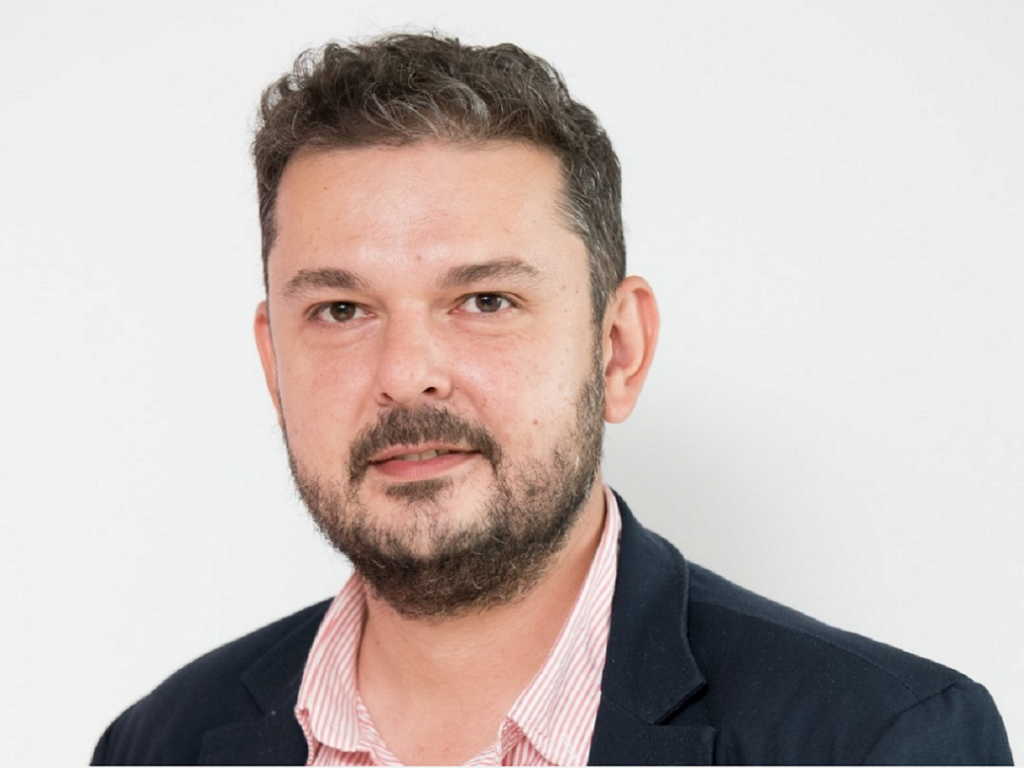
7. And in the first half of 2021, the highest net salaries remained in IT / Telecom. Is that a strong enough reason to convince me to take career-change courses?
If I were in a prospective student's shoes, I'd look at this in a much broader way. Salary wouldn't be the only factor I'd consider.
I've said this before and I'll say it again: I don't think IT is a good fit for everyone. There are several variables at play, such as: way of thinking, personality type, lifestyle. IT isn't necessarily for everyone.
It can be learned, but on one condition: there has to be genuine interest. Yes, if there are people who find this field appealing, or who have flirted, over time, with the idea of taking a step in this direction, they should at least try it — let's see how we get along over a few months of courses.
That's actually how the two-month Intro in IT course came about, to give people the chance to test their intention, determination, skills, and ability to adapt to this field.
If I were in a prospective student's shoes, I'd consider this the best time to try. In this period full of uncertainty, IT is a much safer path than various other industries.
8. How can we better fight the anxieties caused by a drastic career change, made possible through career-change courses in IT?
Through information. Talking to people who are already in the industry, watching interviews, looking for resources. Events have moved online and, with that, become much more accessible. Many of them offer free information and help you figure out who the people in IT are, how they think, how they frame problems, how they talk.
You'll realize that, in the end, they're people too, who went through the same learning stages. No one was born knowing everything. Their knowledge built up over time. There was enough time for it to combine, create an experience, and ultimately consolidate into a profession.
„The new career-change courses mean much more than raw information. Much more than that is needed. Information is free and a click away.”
9. What's important for career-change courses in IT to offer, that most existing ones on the market don't?
What's very, very important is that mix of learning techniques that we've applied here at the Informal School of IT right from the start. It's important to treat anyone going through a career-change process in a holistic, integrated way.
You can't just focus on transferring raw information, people need context. I'm firmly convinced it's never enough to offer just a few training sessions, to hand over raw information. Information is easy to find, it's a click away.
Most of the time, it's even free. That's why I believe so strongly in a hybrid concept we've developed over time at the Informal School of IT, through the career-change courses we offer: the training part, combined with a coaching component and a mentoring component.
The mission of the Informal School of IT is to shape a mindset. Let me give a concrete example: our students have always responded positively to the parallels mentors draw with their own life experiences, when teaching concepts that tend to be abstract, very complex, and hard to learn.
We want graduates, when they run into similar problems in the practical reality of their job, to be able to bring back the examples they were given and implement them themselves.
10. What common traits have you noticed in people who've taken career-change courses?
By far, curiosity. Many of our students were driven by curiosity:
I want to understand why the IT industry is talked about so much. Are IT companies really as open and caring toward people as people say? Is there really this much flexibility?
Yes, these things are true, but we mustn't forget that the responsibilities, expectations, and effort involved are also significant. Just think about applications that manage air traffic control, medical or financial applications, and the effort of the teams implementing them, who have to minimize any potential errors.
And there's another common element: that turning point in a student's life, when they ask themselves: „but what do I, personally, want to do?”.
That's the perfectly right moment to actually start taking one step every day. Getting into IT isn't quite as steep a climb as people think. People have this natural capacity to learn completely new concepts, if they're in the right context.
11. In the near future, do you think most jobs will be anchored in the digital?
I'm convinced they'll have an increasingly strong digital component. We can look back at the past and see that history, even recent history, gives us plenty of examples of this kind of evolution.
For example, we can look at the 2000s to 2010s, when industrial automation started to become widespread, attracting a lot of investment, and many companies decided to create new products using this kind of automation. I remember that, even though goods were being produced through automation, at the organizational level things were still done manually.
Even though companies produced goods through automation, saving time, they weren't nearly as optimized at the level of internal flows, of business processes. Things were done with pen and paper. They couldn't invoice fast enough, they could only do accounting entries or work orders one way: pen in hand.
Can you imagine? You're looking at an organization producing tons of goods a day, but with no digital systems to organize its business. Things have changed, and they keep changing.
12. What advice do you have for people who want to make a career change, but have never found the right moment?
There's a saying:If you keep chasing a dream and it doesn't happen, maybe it's not the right dream for you.
It depends a lot on the time frame you're looking at. If, over a long period, you can't manage to motivate yourself and find the mental arguments to get started on something, maybe there's actually no real motivation behind it.
Maybe you're just flirting with the idea. Maybe you'd like it and some information caught your attention, but it's not strong enough to push you to take action, to open your laptop, find the form, and enroll in a course.
I believe all our students went through this phase, since it's an important decision, but they managed to get past it: they took the bull by the horns, enrolled, and many realized it wasn't quite as hard as they expected.
There are cases where the decision-making process for enrolling in career-change courses takes 3, 6, or even 12 months. And that's normal. But if we're talking about two years or more, it can be a pretty clear signal that there isn't a strong motivation for this field.
In IT, you can't stay stuck in the decision-making process. It's a field where you're constantly making decisions.
YOU CAN TOO! Choose the right course for you
and enroll now!