Informal School of IT (SIIT) is happy to announce the completion of the first project of its incubator for community initiatives, ”Early Work Club” (EWC): The United Villages of Romania.
”Early Work Club” was created with the goal of giving the school's students and graduates the chance to gain hands-on experience on real projects.
The analysis of the specifications for the projects taken on during the ”Challenge Accepted” hackathon, now in its fourth edition under the aegis of ”Informal School of IT”, as well as the coordination of the programming and testing teams, was carried out by the school's mentors, specialists with extensive experience in the field, at major national and international companies.
So let's meet the first beneficiary of the EWC, Irishman Peter Hurley, the man who does more for authentic Romania than all the post-revolutionary tourism ministries combined. Starting this summer, after years and years of personal financial effort and “wrestling” with bureaucracy and the system's set-in-stone mindsets, Peter now has, with the support of Informal School of IT, the long-dreamed-of online platform through which he connects Romania's villages and can take the pulse of rural life.
Peter, how did you come up with the idea for this project? Take us into the story with you!
For a few years now we'd already been heading toward “The United Villages of Romania.” The “Long Road to the Merry Cemetery” festival was born in August 2010, as an awareness campaign about Romania's living, traditional-cultural identity, a universal treasure, unique in Europe precisely because it's still alive.
Every year we experimented, we learned, pushing everything one step further. In 2016, the project “The United Villages of Maramureș” was born, through which we invited villages to organize micro-events over the course of a week.
The basic concept, called “micro-events,” involves cultural gatherings with no stage, with minimal or no sound amplification, “low-cost/no-cost,” built around everyday activities, such as: gathering hay and building haystacks, milking sheep and making cheese, the traditional gathering (șezătoare) and barn dances. These ancestral customs are, for the most part, completely inaccessible to the urban public. Before long, they may disappear from the villages too.
2018, being the Centennial year, naturally pushes us to think of something grand. And not because we place excessive trust in our power to “change the world,” but rather because we're confident in the success of a combination of “a sense of duty” and (smiling) the feeling of “the country is burning, we need soldiers!”.
Romania's authentic traditional culture is racing against the clock. The continuity of village life depends on the care we give it: economic, social, cultural; care that we, in urban Romania, aren't giving enough of. Maybe we don't know “how,” we don't know “where,” but above all, we don't really know “what” – what it's about, why it matters, why we'll miss it so much once we lose it… because it's a living identity.
I, Peter from Ireland, can't tell you “what needs to be done,” I'm just trying to ring the bell, hoping that maybe I can speed up the awakening process. When you're awake, you know for yourself what to do.
But one thing is certain and unequivocal: we're not discussing WHETHER you'll wake up. You've already started. And the rest of us, us Irish included, woke up one by one, so there's precedent. The crucial question is whether you'll wake up in time, in numbers large enough to prevent the cultural suicide you're heading toward. For us (in Ireland, ed. note), that suicide happened long ago.
Can this cultural suicide be prevented?
I see it simply. As long as the heart is still beating, there's hope. And where there's hope, we can actively step in, getting involved in the process of caring for and cherishing it, which is, by the way, an enjoyable, useful and instructive process.
So what should the impact of this project be?
“THE UNITED VILLAGES OF ROMANIA” is a kind of “bridge” for promoting traditional culture. Clearly, the villagers are at the heart of the project.
On one hand, we encourage them to get actively involved, through authentic micro-events promoted within the project, so that the result is an incoming flow of visitors and a positive economic exchange for the community. The message to rural communities is simple: “United, you are stronger!”
On the other hand, we urge the urban public – national, international, diaspora: “Discover Europe's villagers!”. Get actively involved in promoting traditional culture! Because without gardeners, we won't have a garden! The most important gift we can give is our time and interest, by traveling and taking an interest.
How hard was it to reach this stage of building a website, and how did you come to collaborate with Informal School of IT?
The UNITED VILLAGES OF ROMANIA platform became possible thanks to the technology and infrastructure available now. I think that was the hardest part! Ways of communicating that were unimaginable three or five years ago are now made possible by a smartphone accessible to everyone, including the residents of an isolated village.
That opens the way for developing concepts that can speed up support for the village's fragile economy, helping us in this race against the clock, “closing the gap between producers and consumers”.
No “social assistance” from the state can stop the tsunami facing the village economy, only “the market” can – meaning adequate demand at a well-deserved price for their products and services.
A good method – not the only one – for sparking these relationships is micro-events for micro-audiences. We could call it “nano-tourism,” leading to a lasting relationship between urban and rural environments.
Rural Romania has a unique place in Europe because it's a rural culture that's still alive. The United Villages of Romania aims to be a link in this living chain, connecting initiative with audience. Promoted together, I picture many small candles, warming our souls in the dark.
Mihai Talpoș, co-founder of Informal School of IT, contacted me in March, on the suggestion of one of the school's mentors, an employee at a large IT company in Cluj-Napoca. Andreea took part two years in a row in the “Moș Pupăză” summer school, one of our micro-events.
Learning, from the school's co-founder, what the ”Challenge Accepted” hackathon organized by Informal School of IT was aiming for, in April, I decided to apply as well. I registered the project right away and on the first evening, at the pitching sessions, it was accepted. In the days that followed at the hackathon, a structure for the future platform was sketched out, which I've been developing ever since, and here we are, at the moment of launching a functional product.
What was the experience of building the website like during incubation within SIIT's Early Work Club?
I feel like I graduated from Informal School of IT too! I learned so much. I want more!
At every step I worked online with the developer and the tester. For the first time, I saw up close what it means to build a concept from a simple thought, a dream, all the way to reality! Along the way, I came to appreciate, respect and understand those who stand “behind the curtain”!
Daniel Costea, in his role as technical coordinator, kept an eye on things from a distance. Mihai Talpoș got actively involved, becoming a true ambassador for the cause, looking for “out-of-the-box” solutions, and connecting us with other complementary projects. Alex Bordei, directly involved day after day, amazed me in his role as developer. He was so patient with me, and so was Vlad Pintea, as business analyst and tester, unconditionally dedicated, day after day, night after night. Well done, men!
Through the Early Work Club at Informal School of IT, THE UNITED VILLAGES OF ROMANIA benefited from a level of attention, expertise, consulting, vision and actual working hours that would otherwise simply not have been possible. We're an atypical project, with a very small, “barter”-type budget. We wouldn't have found a specialized company willing to “bother” with us.
Who is the man behind the project, Peter Hurley? What motivates him to keep fighting in a country most people are rushing to leave as fast as possible?
I think the Irish and Romanians are a lot alike. We're creative, with a free spirit, forged through centuries of failure, disappointment, agony and sacrifice. We're witnessing a persistent mockery, which here brutalizes you and, yes, drives too many Romanians away.
Romania isn't an easy country. It's a fierce fight here, harsh, but also subtle. It seems to be an inner fight, between the power of the ego and that of common sense. It's very hard to be a decent human being today, anywhere, not just in Romania. I can't even say of myself that I've risen to the level of a “simple, decent person.”
But I'm motivated by the respect and love I've built up for you, as a people, for your complicated story, often impossible to understand, which I've been immersed in for 25 years now, here, day after day. In my little head, I've pieced together the story called “Romania,” a story that, yes, will probably always end like in the Miorița ballad, but where the ending doesn't matter (because there is no ending anyway), only the journey…
I'm motivated by my Romanian children. I want them to grow up proud to be Romanian, eager to work in and for their country.
I decided 10 years ago that I wanted to contribute, not just consume. I came to the conclusion that the source of your free spirit, the native creativity of the Romanian people, springs from rural Romania. That it's your living gold mine, your alchemy. So I decided to invest my time and effort into that. Simple as that.
The “Moș Pupăză” Summer School, in Maramureș
The “Moș Pupăză” Summer School is part of the “United Villages of Romania” project, initiated by Irishman Peter Hurley, and is an educational project for passing on and cherishing ancestral traditions, and for exploring the specific aspects of everyday life in the traditional village. The event will take place between August 12-19 in Valea Stejarului, the Maramureș region, Maramureș County.
At the “Moș Pupăză” summer school, participants of all ages can get acquainted with, or deepen their knowledge of, ancestral folk crafts, both women's and men's, music, dance, painting, and work on a peasant homestead, and experience authentic rural life, from the sacred to the everyday, from field work to the village dance.
Tourists will have an unforgettable experience, spending a week in the countryside, among the locals, where they can be introduced to ancient crafts and taste traditional dishes. Accommodation will be in homesteads in the village of Valea Stejarului, and every evening, dressed in folk costumes, participants will be able to join the villagers in the traditional round dance (hora).
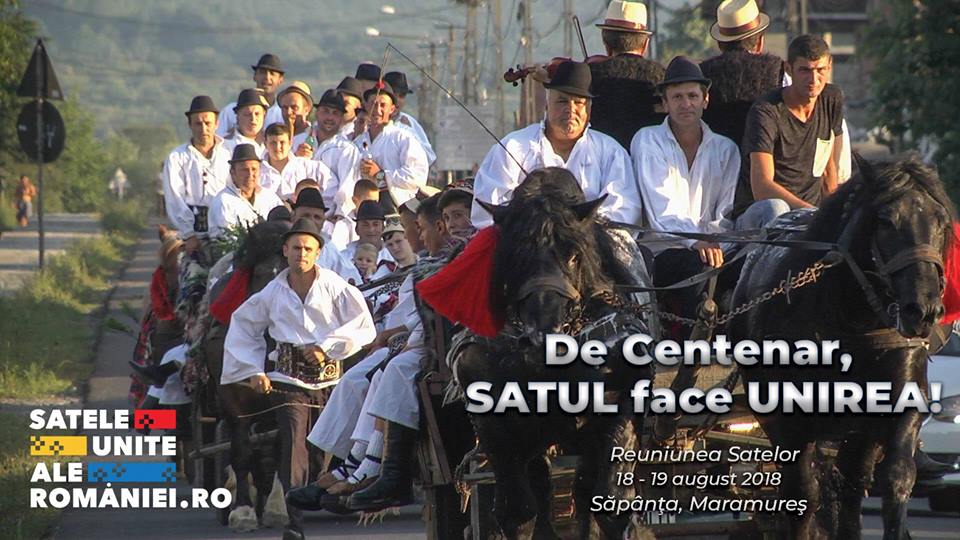
As part of the event, on August 18 and 19, 2018, in Săpânța, the „Gathering of the Villages„ will take place, which representatives of villages from all over the country are expected to attend.