About Soft Skills, with Elena Badea, Managing Director of consulting firm Valoria and Mentor at Informal School of IT
May 11, 2022
See what advice she has for you and how you can increase your chances of being remembered by the recruiter.
1. There's a lot of talk today about soft skills and their importance in the eyes of employers. What are these soft skills that matter so much today in the job market and in IT?
The abilities also known as soft skills are very important, and they give technical abilities, also known as hard skills, a foundation for success.
What do I mean by that? That the days of scholars working alone on world-changing discoveries are long gone. Nowadays success belongs to teams, and it's created together by their members through assertive communication, collaboration, problem-solving, critical thinking and many other soft skills.
The results of research carried out by Harvard University, the Carnegie Foundation and the Stanford research center are well known, and all of them confirmed that 85% of long-term professional success comes from soft skills and only 15% from hard skills.
It's equally well known that employers pay close attention to essential competencies, those core competencies, which they assess through various technical tests.
Why do we need to keep this in mind? Because, obviously, employers need competent people on their teams.
Who wants to work with colleagues who are technically exceptional, but whose people skills and attitude leave much to be desired? No one.
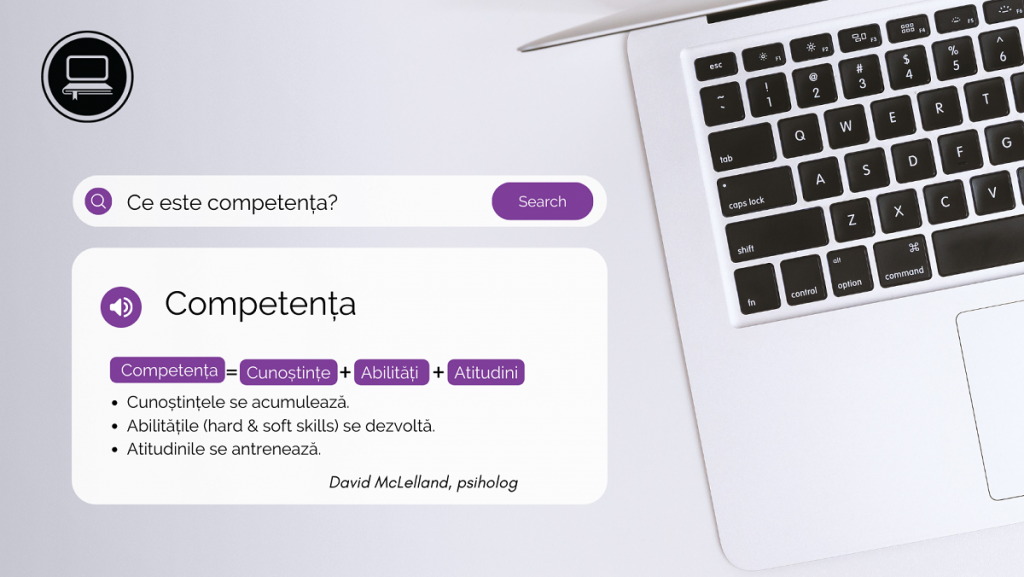
But what is the formula for competency? Well, the answer comes from American psychologist David McLelland, and it looks like this:
Competency = Knowledge + Abilities + Attitudes- Knowledge is accumulated and is more theoretical.
- Abilities (hard & soft skills) are developed and represent knowledge successfully put into practice.
- Attitudes are trained and are mental dispositions that influence individual reactions.
“Your attitude will determine your altitude”, says a quote circulating on social media. What does that mean? Simple: between two candidates with similar technical abilities and knowledge, the difference will be made by soft skills, plus attitude.
Who wants to work with colleagues who are technically exceptional, but whose people skills and attitude leave much to be desired? No one.
2. What are the soft skills IT employers are looking for right now?
We should say, right from the start, that there are two types of soft skills: intrapersonal abilities and interpersonal abilities. What are these?
Intrapersonal abilities relate to yourself and the way an individual manages, in their inner reality, the problems that come from outside. Intrapersonal soft skills include self-management (self-leadership), stress management and emotional control.
Interpersonal abilities are the ones that help you relate to and collaborate with other people. Among the best-known soft skills in this category are assertive communication skills, conflict management, leadership and teamwork.
Research carried out by major recruitment platforms in Romania shows us which soft skills are at the top of IT employers' preferences. These are as follows:
- Assertive communication (83% of respondents)
- Problem-solving (82%)
- Teamwork (81%)
- Self-management (72%)
What other abilities help candidates stand out?
- A solutions-oriented mindset
- A desire for continuous learning
- Proactivity
- Autonomy
- The courage to innovate
- Passion for what they do
We need to understand that the “free style” approach doesn't work anymore, and neither does “I'll figure it out at the interview.” These don't lead to success.
3. If I have soft skills, what does that mean? That I'm guaranteed the job, and technical abilities aren't what matters most at a job interview?
There are several points to make here, as follows:a.
From the competency formula, we saw that technical abilities alone aren't enough. Why? Because recruiters also look at candidates' knowledge base, way of thinking, way of communicating, way of relating to others, etc.
Beyond interview techniques, many other methods are used to see what's behind candidates' technical abilities, from batteries of psychometric tests, to paid internships or assessment centers.
b.
When the goal is a career change, candidates targeting entry-level IT positions don't really have significantly different technical abilities from one another. They're just starting out and still have a lot to learn. It's exactly in this context that the biggest difference comes from soft skills. So pay close attention!c.
IT employers have well-structured, tested and “well-oiled” recruitment processes. Demand is high, so are volumes, and the retention rate needs to be monitored, along with many other indicators measured with People Analytics tools, etc.
Given this, it's really necessary for CV preparation and interview preparation to be done carefully, for both hard skills and soft skills.
What important recommendation do I have? Candidates would do well to understand that the “free style” approach doesn't work anymore, and neither does “I'll figure it out at the interview.” These don't lead to success. That's why it's good to act keeping this principle in mind:if you fail to prepare, you prepare to fail, as well as this one: where attention goes, energy flows.
4. How do the soft skills sessions at Informal School of IT help me showcase my knowledge in my CV and at the job interview?
The soft skills sessions at Informal School of IT bring candidates three concrete, clear and immediate results:
- A validated method and clear criteria for building an outstanding CV
- A tested and validated approach for succeeding at the job interview
- A boost in self-confidence that they will succeed by applying the methods they've learned
How is that possible? Three things set me apart as a mentor and make achieving these goals possible:
- First of all, I have a solid foundation from more than 25 years of business experience, during which I've run or taken part in complex recruitment processes.
- I know the business environment in Romania, and beyond, very well, including recruitment methods, technologies and techniques.
- I have excellent knowledge and skills as a marketer, trainer, executive coach and negotiator.
As a result, participants go through a complex, intense and interactive learning process, combined with a massive boost in self-confidence through specific NLP techniques applied in team coaching.
What do students say at the end of this soft skills course? Here are two recent examples:
“Thank you so much for all the information you shared. The course was WOW and all the information I received is very important. I feel that all the techniques I learned will help me find a job in IT very soon.”
”The course was incredible. In short – life changing! Thank you so much!”
What else is important to remember? That Informal School of IT is the only one in this field to have such a soft skills course, unique in its structure, effectiveness and results.
5. It's said that there are CVs that grab recruiters' attention in just 8 seconds. Is that real or a myth? Why, and how do certain soft skills help with that?
I can't say for sure whether that's true or not, especially now that CV screening is increasingly done with Applicant Tracking System (ATS) software.
What I can tell you, though, is how I think this belief came about. The moment we look at a CV, the brain first forms a general impression of it: how cluttered or “airy” it is, whether it's neat and nicely formatted or not, whether it has lots of colors, few colors or none at all (black/white), whether it's arranged symmetrically or everything's “all over the place,” etc.
This general impression can form in 8 seconds, after which the brain files the CV under “I like it and it'll be great to read” or under “I don't like it and it'll be an awful experience to read.”
But there's another aspect that's very important and needs to be kept in mind: recruiters are very good professionals, most of them have years of experience in what they do and they use technology to do a really good job.
In conclusion, I encourage students to take care of their CV and, with the help of what they've learned in this course, to confidently reach their goals: getting hired successfully, as quickly as possible, and finding the right place for their professional growth.
It's absolutely remarkable how much support students get in this process from the mentors and managers at Informal School of IT.
Tips & tricks for your CV and for the online job interview
6. During the soft skills sessions at Informal School of IT, I understand I'll get tips & tricks I can apply right away, to make myself visible to IT employers. Give me some examples.
At the soft skills sessions at Informal School of IT, we work in an integrated way on 3 levels: criteria, self-awareness, structure. Only those who take the course see the full picture and the unique methods I explain.
Students say this course is a complete experience: it's interactive, dynamic, participatory, surprising and super fun!
We're not after shortcuts or recruitment hacks, but we do share some tips & tricks, which I've split into two categories:
Tips & tricks for your CV
- 1. Make your CV in Canva.com, and keep it to a maximum of 2 pages.
- 2. You MUST include keywords from the job ad's text in your CV.
- 3. Green “doesn't sell,” so don't use it.
- 4. The “good” color combinations are:
- white, black, dark gray, orange – Denotes emotional intelligence
- white, black, dark gray, zinc yellow – Denotes openness and optimism
- white, black, cobalt blue – Denotes professionalism
- white, black, purple – Denotes high aspirations and vision
- 5. If possible, also send a video CV of no more than 1 minute.
Tips & tricks for the online interview
- 1. Make sure you look directly at your laptop's camera.
- 2. Stay relaxed and smile as appropriate for the situation.
- 3. Especially at the start, mirror the posture of the person you're talking to.
- 4. Don't leave the interview without asking at least 2-3 questions of your own.
7. From your extensive experience, give a piece of advice for those reading this interview: how do I start training my soft skills?
At the soft skills course, I give participants a long list of additional resources to check out: from articles and book recommendations, to podcasts and video materials.
Why do I do that? Because the simplest way to train your soft skills is to read or take online courses. There's a wide range of options for every budget. The best way is to work with an experienced coach, to go through a personalized process tailored exactly to the candidate's personality type and goals.
I've seen over time that there are two kinds of people: those things happen to, and those who make things happen. Even though we often run into unpleasant encounters with the first category, I've noticed there are more and more people in the second one.
So, at the soft skills course at Informal School of IT, I see people who own their choices, who understand the major difference these abilities make in every aspect of their lives. They choose to train and refine themselves, working with a mentor or a life coach to perfect these abilities, of which there are quite a few.
These people are clear in their minds that their time is their most important resource, that life is a sum of decisions made with a clear head, and that one of the most important ones is to take charge of your own growth.
YOUR CAREER IN IT STARTS WITH US
ENROLL HERE!See the 25 Essential Soft Skills in IT
1. Assertive communication
2. Active listening
3. Persuasion
4. Self-management
5. Emotional intelligence
6. Problem-solving
7. Teamwork
8. Customer orientation
9. Continuous learning
10. Proactivity
11. Resilience
12. Creativity
13. Leadership
14. Openness
15. Adaptability
16. Negotiation
17. Agility
18. Organization
19. Critical thinking
20. Autonomy
21. Curiosity
22. Presence
23. Attention to detail
24. Conflict management
25. Dedication