“I thought about what my career would look like in the next 5–10 years, and I didn't like what I imagined”
November 28, 2018
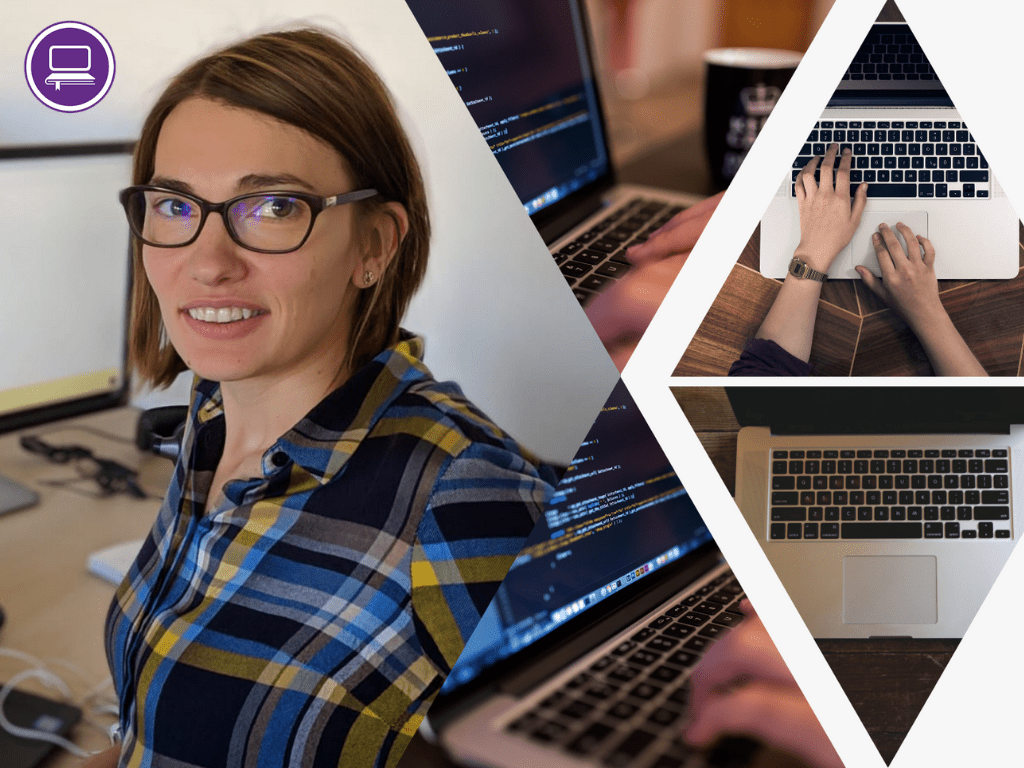
“So I chose to change tracks.” To choose, I will choose, I can choose, and choices. The words get conjugated, declined, change shape. Their meaning hides, however, stories – answers to challenges, changes embraced, decisions put into action, responsibilities taken on. They also speak of people who committed every skill and ability they had developed throughout their lives, in a test of ambition, pursuing every goal that could lead them toward a career in IT. They also speak of passion. Because a genuine passion for technology brought Corina Radu to the Informal School of IT — a graduate who proved that things can change and evolve, professionally and personally, even at 33. “From word to deed” became, through hard work, “from step to leap” for Corina. Let's give her the floor!
I envied them for going to work happily
1. You steered your career toward software testing, starting from a technical professional background. How did the transition happen?
I entered the workforce in an engineering field. My former and current jobs have the computer in common — I always liked “handling” technology. There came a moment when I thought about what my career would look like in the next 5–10 years, and I didn't like what I imagined. So I chose to change tracks. The push toward IT came from my programmer friends, whom I envied for going to work happily, in a pleasant environment with benefits clearly better than those in my own field.
2. Do you still remember your first day at the Informal School of IT?
I remember coming in with a mix of nerves, excitement, and eagerness to learn, on one hand. On the other hand, there was the fear that I wouldn't be able to keep up with the requirements. I was lucky to have a great mentor who knew how to break the ice, and the atmosphere quickly became pleasant and conducive to learning.
3. What did you find different about the Informal School of IT compared to other learning environments?
An experienced mentor to learn from, plus very well-structured information. I was certain that what I was learning was genuinely useful, unlike other sources of information where it was more up to me to filter the information, losing time and energy in the process.
About myself, I learned that I can
4. How did the mentor influence what you know today and practice at your job?
I'm very grateful to my mentor for how involved he was. He constantly gave feedback, motivated and encouraged us, and translated IT language into plain Romanian. I applied what I learned, used tips & tricks I picked up from my mentor, and that made settling into my job much easier.
5. The most important lesson learned?
I learned technical and non-technical things, such as how to present myself at interviews, which I used to dread. But I think the most important lesson was that anything is possible with willpower.
6. What are the most important things you found out about yourself, about the IT industry, and about software testing?
About myself, I learned that I can do it. About the IT industry, I learned that it can offer you a very good job, employers are willing to invest in people, and employees are treated with respect. I learned that testing isn't just about clicking around in an application — it influences the entire development process.
Tickets, reports, test cases, bugs, jokes, coffee, and chocolate
7. How did you see software testing when you first started dabbling in the field, and how do you see it now?
I have to admit I looked at testing pretty superficially. There was a rumor going around (and I believed it) that it's easy and anyone can be a tester. Now I realize that's not the case at all — as a tester you face plenty of challenges to deliver a quality product.
8. What does an employer look for in a Software Tester? Tell us from experience, since this is already the second company in the field where you've worked.
In IT you work as a team, so it's important for a tester to adapt quickly, communicate effectively, and be willing to take on responsibilities. Technical knowledge and attention to detail, as well as the ability to understand the project as a whole, are also important factors.
9. Tell us about the satisfaction your new career brings you. What does a typical workday look like today?
A typical day starts with reading emails, then team meetings to set out the day's activities. Between tickets, reports, test cases, and bugs, there's always room for jokes, coffee, and chocolate. The greatest satisfaction is when we deliver a good product and the client is happy.
Now I look toward the future with confidence and excitement
10. What do you think someone who wants a career in the software industry should know about the Informal School of IT?
The Informal School of IT makes it a lot easier to break into the IT industry. Even without experience, a graduate has much better odds of passing an interview than if they learned on their own. It takes effort, but it's worth it. For me, the whole time I spent studying there had an impact on my growth. It was a series of challenges that helped me grow professionally and personally.
11. What do you think is the bias someone who doesn't have the courage to change careers has in mind?
In my view, the bias is tied to learning and age. It feels strange to start from scratch in a new field past a certain age, but I believe that regardless of that, it's important to find the occupation that brings you satisfaction and to adapt to what the market demands. What helped me was that, even though I'm a junior in my 30s, I now look toward my future career with confidence and excitement.